Dolores Huerta visits the Lewis Leadership Program Museum of Service, February 24, 2026
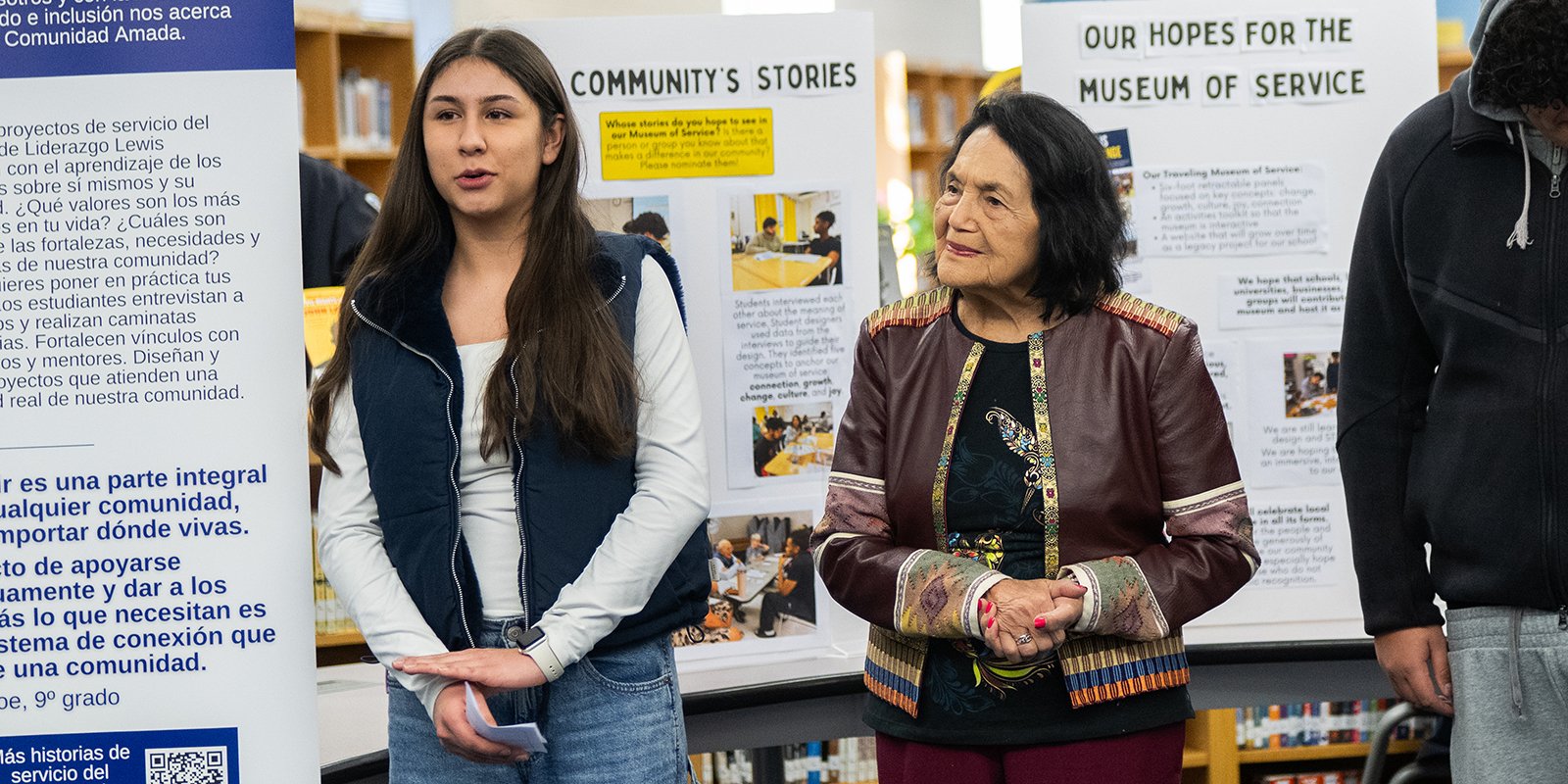
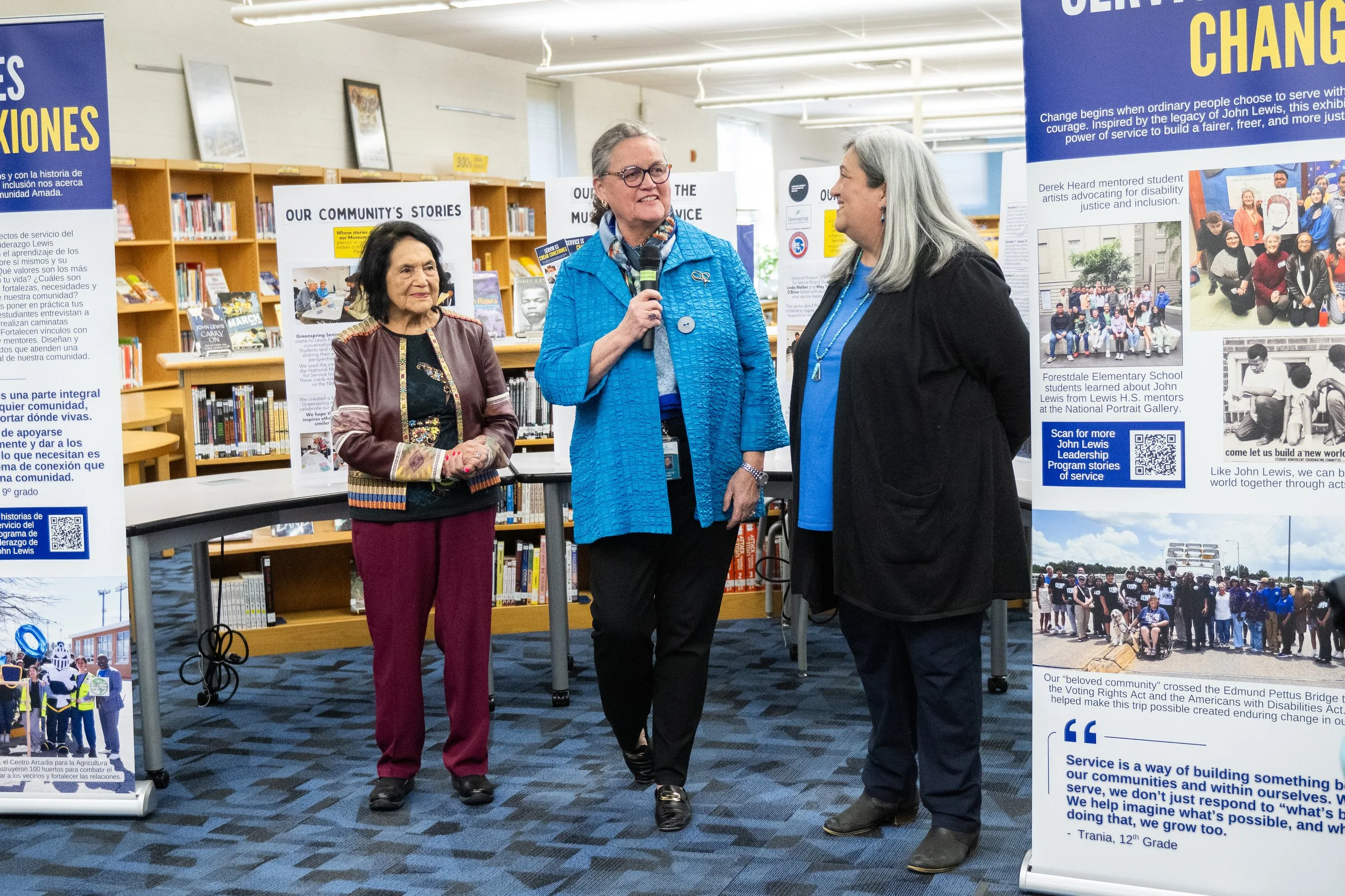
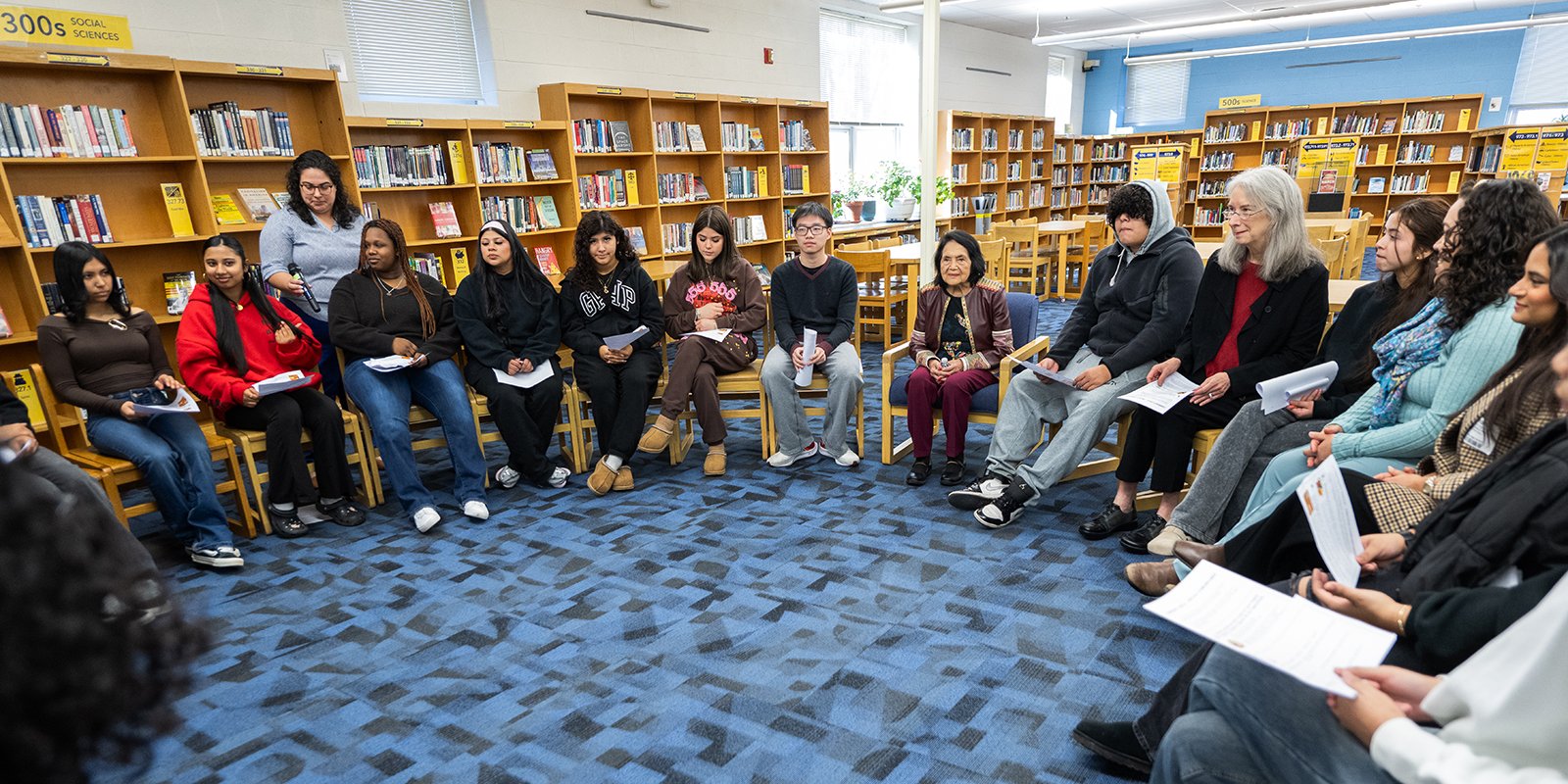
Labor activist and civil rights leader Dolores Huerta visited the Lewis Leadership Program Museum of Service as part of her full-day visit to the school as the keynote speaker for our celebration of John Lewis’s birthday. She participated in a community circle, listened to students’ hopes for the future, and advised the next generation of change-makers.
When you’re out there helping people, try to get them to do something to help themselves, okay? Because you don’t want people to always have to be dependent. We don’t want them to look at themselves as victims. We want them to understand that they have power. Then you’re not just being a service provider. You’re also being an organizer. You’re helping them organize. You’re helping people stay strong. Got it?
Dolores Huerta has spoken in the past about the difference between helping people and empowering people. When she shared these insights with our students, she was affirming their efforts to help others and improve their community. She was also reflecting on the similarities and differences between her experiences in service work and organizing work. And she was pushing back against approaches to service that put communities in a passive or voiceless role.
She reminds us that a better world is only possible when ordinary people claim their own power to shape their lives and communities. She shared at length about this in 2023 on Dr. Patricia Campos-Medina’s podcast:
My mother always told us when we were little that if you saw anyone that needed help, if you could help them, then you had an obligation and a responsibility to help people. And also you should not ask for any kind of a reward or compensation when you help someone. That is our responsibility as human beings. So that is the way that I was raised. My mother was a very compassionate woman. She had a business but she was always helping people in the community. I was a Girl Scout for ten years of my life, from the time I was like 8 years old to the time I was 16. And in the Girl Scouts, that’s also the mantra, to be of service to others.
There is a difference between helping people and organizing to make people help themselves. As a youngster, I belonged to different organizations, women’s organizations. We would have dances, make money, and then give gift baskets and food baskets at Christmas and Thanksgiving to poor people. But once I learned that if you can get people to organize and to take direct action, nonviolent action, then they can make changes in their communities, not only for themselves but for other people.
I know when we help people, it makes us feel really good. We feel powerful. We’re helping them. But when you’re saying to people, “I want you to get yourselves together. Bring your friends, your neighbors, we’re going to form a group, we’re going to form a union, we’re going to form a community group. Because we want you to do the work out there in the community that needs to be done. It’s a little different then, because people kind of push back.
That is the trick, and that’s the root of organizing. To make them take leadership, to make them get up in front. Not you as the organizer to speak for them, but to get them to speak for themselves. And people don’t feel like they’ve got the right education. They don’t feel that they have the right experience. So most people will hold back. In fact, Helen Keller who we know was a great leader in our society in the United States of America, what she said was, and I’m going to paraphrase what she said: the greatest evil that exists in human beings that scientists have not found a cure for is apathy. That is such a danger for a democratic society. Because a democratic society depends on people participating, on being involved, on having people speak up. If everyone can understand not only do they have a right to participate, they have a duty to participate.
Dolores Huerta’s insights about voice, agency, and partnership are crucial considerations to all people engaged in service. To learn more about Dolores Huerta’s visit to John Lewis High School, read this FCPS article.
